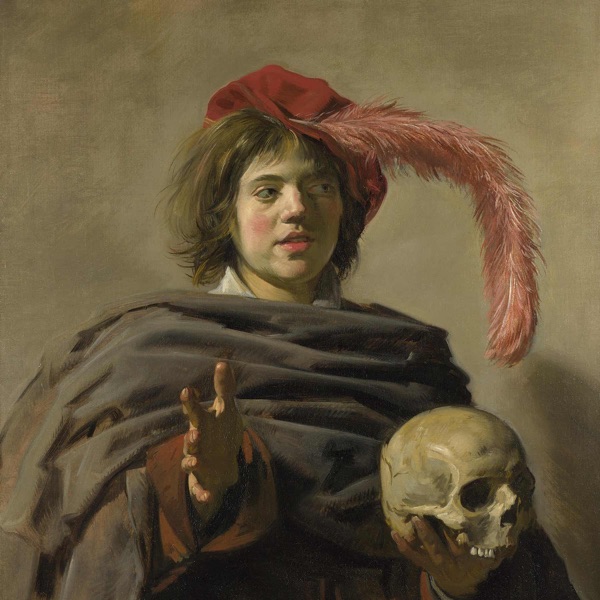
Last week, the day after the 300th anniversary of the publication of Gulliver’s Travels, I sat down with my colleague Shruti Rajagopalan to discuss Swift’s great novel. Shruti is an economist with a law degree, so her delight in the Travels is accompanied by a respect for Swift’s ability to think like an economist. We talked about progress, “improvement”, Adam Smith, watches, rationalism and EA, Game Theory, slavery, Ireland, whether Swift is a proto-libertarian, and more, including why Shruti doesn’t love Middlemarch. Shruti also kept passing me passages to read aloud. This was a lot of fun for me. Many thanks to Shruti!
This is a public episode. If you would like to discuss this with other subscribers or get access to bonus episodes, visit www.commonreader.co.uk
Obviously, this is mostly about the literacy crisis, whether we understand it properly, whether it is happening in Spain, whether the PISA data supports James’ thesis, and so on. I began by asking James Marriott how things might work out for the best…
OLIVER: So the book is about the reading crisis and the risk it poses to liberal democracy. I want you to tell me, what is the most likely optimistic outcome? You might think that the odds of everything going well are very low, but if we do scrape through, what will it look like?
MARRIOTT: That’s such a good question, and nobody has ever asked me that question before. Seeking optimism from me is a unique idea. I think the most likely optimistic outcome, as I think so often in history, is stagnation and more of the same, and things don’t change.
We also talked about AI as a transmission of liberal democracy, a means of distributing James’ own work, and things like that. At the end, we had some fun about literary critics and Shakespeare which is much more civilized that arguing about the literacy crisis.
MARRIOTT: Yes, I’m keen to read The Winter’s Tale, and I’ve got it, actually. It came in my little set.
OLIVER: I think you’ll be pleasantly surprised, and then you can read Northrop Frye’s book about it.
MARRIOTT: Yes.
OLIVER: Which would be James Marriott–coded.
MARRIOTT: Yes, good. I am very biased towards things that are James Marriott–coded.
The Frye book I had in mind was A Natural Perspective. James is also going to read A.C. Bradley and we might record another podcast about that. Bradley being one of the greats.
Transcript
HENRY OLIVER: Today I am talking to James Marriott. James is a Times columnist, a Substacker—he writes Cultural Capital—and he has a new book called The New Dark Ages. James, welcome.
JAMES MARRIOTT: Thanks very much for having me.
The Reading Crisis
OLIVER: So the book is about the reading crisis and the risk it poses to liberal democracy. I want you to tell me, what is the most likely optimi...
Philip Hensher and I discussed the history of the novel in Britain from Defoe to Hollinghurst. Philip is remarkably well-read and happy to share his real opinions. He can go from Swift to Fitzgerald on the turn of a pin, isn’t shy about holding his ground, and has some very firm views. People who read novels are protected against becoming violent. Ideas are not important in most novels. Walter Scott isn’t very good. Arnold Bennett is a top 20 novelist. Rachel Cusk has the best chance of being read in 100 years. That sort of thing. Here’s one exchange where we disagreed about what a novel is.
HENSHER: Oh, Henry, Henry, how can you kill a book like that? How can you—
OLIVER: Look, you can’t have Jane Austen without the Enlightenment, and you can’t have George Eliot without the secularization of Jesus, and you can’t have Tolstoy without all the slightly incredible things that he believed.
HENSHER: No, let’s not talk about Tolstoy.
OLIVER: No, but the list goes on, right? Henry James even, who is often called a man of no ideas, he’s an incredibly good liberal. He might be the best novelist about the liberal idea that one person should not be allowed to dominate over another, in private conditions rather than just government. These ideas are, in a way, they’re the thing that distinguish those writers. Jane Austen knows how to observe and how to present because she’s thinking about what it means underneath.
HENSHER: I don’t know. I don’t know about that.
OLIVER: I don’t even think you can have Middlemarch without John Stuart Mill’s political economy, in a way.
HENSHER: Yes, that’s probably true. But George Eliot’s an unusual sort of novelist.
Jane Austen, I mean, how do we know what did she—what did Jane Austen think about slavery in the boldest and most extreme form? I think we can deduce that she thought that people involved in the slave trade or who came near it, like Mrs. Elton, were not at all the sort of people that she would altogether like to hang out with. I thin...
What a lot of fun I had talking to Zena Hitz about Gulliver’s Travels. As well as discussing Swift, slavery, genocide, rationality, Christianity, and science, Zena told me that good philosophy is like a box of cake mix and that a liberal education requires you to be freed of false expertise. I also took Zena on a detour to discuss Iris Murdoch, the Catherine Project, and modern philosophy.
TRANSCRIPT
HENRY OLIVER: Today I am talking to Zena Hitz. Zena is a tutor at St. John’s College. She is a philosopher, the author of Lost in Thought. She runs the Catherine Project. She’s famous on Twitter. We don’t know how she does it all. Zena, welcome.
ZENA HITZ: Thank you, Henry. It’s great to be here.
OLIVER: And we’re talking about Gulliver’s Travels because it is 300 years since it was published, and it’s a book that you love.
HITZ: A book that I’ve loved for a long time.
First Encounter with Gulliver’s Travels
OLIVER: So tell me, when did you first read it?
HITZ: Well, it was an important moment for me. I was in high school, and I was admitted to a scholarship summer program which offered college courses at different campuses. There were some normal-looking college courses at normal-looking colleges. And then there was this course at St. John’s called Science as Literature, Literature as Science. [laughs] It had this description that was just unbelievable. And I thought to myself, “This is the one, obviously the one to go to.”
So I went, and we read books that no one in their right mind would assign to high school students now, and maybe not then. The fragments of Parmenides, Plato’s Timaeus, selections from Aristotle’s Physics, Gulliver’s Travels. After reading a number of—preface to Ptolemy’s Almagest, geocentric astronomy. And we read Gulliver’s Travels after reading selections from Hooke’s Micrographia, so the inventor of the microscope, and Galileo’s Starry Messenger, which is one of the great first uses of the telescope to discover the nature of the moon and the sa...
My colleague Oliver Traldi recently published an essay called ‘Jane Austen’s Virtuous Liberalism’. It’s a very nice discussion of the ways in which Austen understand the challenges of character formation.
Virtue, as Austen sees it, faces two tough challenges. First, people whose characters are not yet formed must see how to be virtuous rather than vicious. Then, the virtuous must somehow find a way to succeed in their struggles against the vicious without adopting vicious means.
In this episode, Oliver and I discussed Austen’s ideas of virtue, what that has to do with liberalism, the relationship between philosophy and literature more broadly, as well as poetry and ideas about the Great Books. We also talked about the Keira Knightly Pride and Prejudice. Yes, we both liked it. Here is why Oliver thinks Jane Austen is so popular among philosophers.
TRALDI: And so I do think that even though she’s not making arguments, she’s not laying out philosophical theories, there is a level of precision in her thinking about virtue, which I do think is something that it took me a little aback.
And I think it’s part of why—one person who quote-tweeted my article was Daniel Kodsi, who’s a friend of our colleague John Maier and his coauthor often. And he runs this magazine called The Philosophers’ Magazine, which I had written before. And Daniel quote-tweeted my article with something like, “Add Oliver to the list of all the philosophers who love Austen.”
OLIVER: And it’s a long list.
TRALDI: And I think it’s a long list. And I do think this precision is part of it that she does, that it is—again, it’s not like a philosophy journal article, but it is an intellectual sophistication that is often not present in novelists that we really appreciate.
And here is an extract about Austen, Smith, and the wonderfully fertile period at the end of the eighteen century.
TRALDI: But yes, I think it’s obvious—without knowing the background, I’m sure there are scholarly questions about, how much S...
What a delight to talk to laura thompson about Agatha Christie. Above all, this episode was fun. Laura really does know more than anyone about Agatha and we covered a lot. What did Agatha Christie read? What did she love about Shakespeare? Was she pro-hanging? Why so much more Poirot than Marple? Why was she so productive during the war? We also talked Wagner, modern art, the other Golden Age writers, nursery rhymes, TV adaptations, poshness, nostalgia, Mary Westmacott, and plenty more.
Transcript
HENRY OLIVER: Today I am talking to the very splendid Laura Thompson. All of you will know Laura’s Substack. She has also written books about the Mitfords, heiresses, Lord Lucan, many other subjects, and most importantly today, Agatha Christie, who died 50 years ago. And there’s a new book coming from Laura about Agatha Christie’s 1926 disappearance.
Laura, welcome.
LAURA THOMPSON: So lovely to be here, Henry. I’m such a fan of your Substack, as you know.
OLIVER: Well, same. Same. This is a mutual admiration call.
THOMPSON: Well, thank you. Well, that’s what we like.
Christie’s Favorite Writers
OLIVER: Now tell me, what did Agatha Christie like to read?
THOMPSON: Oh, a lot the same as us. I discovered she was a huge fan of Elizabeth Bowen, as we are. And Nancy Mitford, Muriel Spark. But her big love really was Dickens. She absolutely adored Dickens. I mean, she grew up in a house full of books, you know, and she wrote a screenplay of Bleak House for which she was handsomely paid. And it was never—I know, don’t you long to know what that was like? Can you imagine—
OLIVER: We’ve lost it? We don’t have the typescript?
THOMPSON: I’ve never seen it. I mean, maybe—I don’t know whether it exists somewhere. But I just wonder how she tackled it, what she did. But yes, so that happened. And of course, Shakespeare, as we know from her books, which are full of subliminal and—I mean, you kind of notice them, but you don’t have to.
OLIVER: Yes. There’s Shakespeare in every book?
THOMPS...
What a pleasure it was to talk to Ruth Scurr, author of John Aubrey: My Own Life, about the great man himself, who was born four hundred years ago this month. Aubrey is best know for his splendid Brief Lives but he preserved a huge amount of knowledge which historians still rely on. There are many things we only know because of Aubrey—things about people Hobbes and Hooke, Stonehenge, architectural history. We also talked about Janet Malcom, the genre of biography, and modern fiction.
HENRY OLIVER: Today I’m talking to Ruth Scurr. Ruth is a fellow of Gonville and Caius College in the University of Cambridge, where she specializes in the history of political thought. But more importantly, she is the biographer of John Aubrey, one of my favorite writers, who is celebrating 400 years of his birth this year. Ruth, hello.
RUTH SCURR: Hi, Henry.
OLIVER: Can you begin by giving us a brief life of John Aubrey?
SCURR: So born in 1626, 17th-century antiquarian, collector, early fellow at the Royal Society. Well connected to scientific and the literary circles of his day. Someone who sees himself more as a whetstone: a person who could help sharpen other people’s ideas. As a recorder, someone who treasured the details, the minutiae of the lives he encountered, and pass those details on to posterity.
He’s nonjudgmental, witty, kind, inventive. Very, very sociable. Very good friend. But he’s hopeless at self-advancement. Begins his life as a gentleman, but he inherits debts from his father and he can never really achieve financial stability.
Never marries, ends up homeless and worried about being arrested for his debts. And he has to sell his precious collection of books periodically through his life to raise some much-needed cash, but he keeps his manuscripts safe. And he does this at the end of his life by putting them into the Ashmolean Museum in Oxford, afterwards known as the Bodleian, and where they still are today.
OLIVER: So how many manuscripts did he save for us?
SCURR:...
Ahead of her new book What’s So Great About the Great Books? coming out in April, Naomi Kanakia and I talked about literature from Herodotus to Tony Tulathimutte. We touched on Chaucer, Anglo-Saxon poetry, Scott Alexander, Shakespeare, William James, Helen deWitt, Marx and Engels, Walter Scott, Les Miserables, Jhootha Sach, the Mahabharata, and more. Naomi also talked about some of her working habits and the history and future of the Great Books movement. Naomi, of course, writes Woman of Letters here on Substack.
Transcript
Henry Oliver: Today, I am talking with Naomi Kanakia. Naomi is a novelist, a literary critic, and most importantly she writes a Substack called Woman of Letters, and she has a new book coming out, What’s So Great About the Great Books? Naomi, welcome.
Naomi Kanakia: Thanks for having me on.
Oliver: How is the internet changing the way that literature gets discussed and criticized, and what is that going to mean for the future of the Great Books?
Kanakia: How is the internet changing it? I can really speak to only how it has changed it for me. I started off as a writer of young adult novels and science fiction, and there’s these very active online fan cultures for those two things.
I was reading the Great Books all through that time. I started in 2010 through today. In the 2010s, it really felt like there was not a lot of online discussion of classic literature. Maybe that was just me and I wasn’t finding it, but it didn’t necessarily feel like there was that community.
I think because there are so many strong, public-facing institutions that discuss classic literature, like the NYRB, London Review of Books, a lot of journals, and universities, too. But now on Substack, there are a number of blogs—yours, mine, a number of other ones—that are devoted to classic literature. All of those have these commenters, a community of commenters. I also follow bloggers who have relatively small followings who are reading Tolstoy, reading Middlemarch, reading...
Hermione Lee is the renowned biographer of Virginia Woolf, Edith Wharton, Penelope Fitzgerald, and, most recently, Tom Stoppard. Stoppard died at the end of last year, so Hermione and I talked about the influence of Shaw and Eliot and Coward on his work, the recent production of The Invention of Love, the role of ideas in Stoppard’s writing, his writing process, rehearsals, revivals, movies. We also talked about John Carey, Brian Moore, Virginia Woolf as a critic. Hermione is Emeritus Professor of English Literature at the University of Oxford. Her life of Anita Brookner will be released in September.
Transcript
Henry Oliver: Today I have the great pleasure of talking to Professor Dame Hermione Lee. Hermione was the first woman to be appointed Goldsmiths’ Professor of English Literature at the University of Oxford, and she is the most renowned and admired living English biographer. She wrote a seminal life of Virginia Woolf. She’s written splendid books about people like Willa Cather, Edith Wharton, and my own favorite, Penelope Fitzgerald. And most recently she has been the biographer of Tom Stoppard, and I believe this year she has a new book coming out about Anita Brookner. Hermione, welcome.
Hermione Lee: Thank you very much.
Oliver: We’re mostly going to talk about Tom Stoppard because he, sadly, just died. But I might have a few questions about your broader career at the end. So tell me first how Shavian is Stoppard’s work?
Lee: He would reply “very close Shavian,” when asked that question. I think there are similarities. There are obviously similarities in the delighting forceful intellectual play, and you see that very much in Jumpers where after all the central character is a philosopher, a bit of a bonkers philosopher, but still a very rational one.
And you see it in someone like Henry, the playwright in The Real Thing, who always has an answer to every argument. He may be quite wrong, but he is full of the sort of zest of argument, the passion for argumen...
This episode of The Common Reader podcast is a little different. I spoke to both Jeffrey Lawrence and Julianne Werlin about literature, politics, and the future of the academic humanities. Questions included: what do we mean when we talk about literature and markets? Can we leave politics out of literary discussion? Should we leave it out? If we can’t leave it out, can we have nice friendly conversations about it? What is academic Marxism? We also talked about whether Stephen Greenblatt is too ideological and why universities are necessary to literary culture, academics on Substack.
Julianne writes Life and Letters. Jeffrey writes Avenues of the Americas. Here is Julianne’s interview in The Republic of Letters.
Transcript (AI generated, will contain some errors)
Henry Oliver (00:00)
Today I am talking to Jeffrey Lawrence and Julianne Werlin.
Jeffrey is a professor of English literature and comparative literature at Rutgers University. He specializes in the 20th and 21st century and he writes the sub stack, Avenues of America. Julianne probably needs no introduction to a sub stack audience. She writes Life and Letters, one of my favorite sub stacks. She’s a professor of English at Duke University, where as well as specializing in early modern poetry, she is interested in sociological and demographic studies of literature.
and we are going to have a big conversation about literature and markets, politics, what do we mean when we talk about literature and markets, can we leave politics out of literary discussion, should we leave it out, if we can’t leave it out, can we have nice friendly conversations about it, and also maybe what is academic Marxism and what should it be and why is it so confusing? Jeffrey and Julianne, hello.
Julianne (00:59)
Hi.
Jeffrey Lawrence (01:01)
Hi, thanks for having us.
Julianne (01:02)
Yeah, thank you.
Henry Oliver (01:04)
I am going to start by referencing an interview that you did, Julianne, for Republic of Letters, which everyone has...
Tuesday is the 250th anniversary of Jane Austen’s birth, so today I spoke to John Mullan, professor of English Literature at UCL, author of What Matters in Jane Austen. John and I talked about how Austen’s fiction would have developed if she had not died young, the innovations of Persuasion, wealth inequality in Austen, slavery and theatricals in Mansfield Park, as well as Iris Murdoch, A.S. Byatt, Patricia Beer, the Dunciad, and the Booker Prize. This was an excellent episode. My thanks to John!
Transcript
Henry Oliver (00:00)
Today, I am talking to John Mullen. John is a professor of English literature at University College London, and he is the author of many splendid books, including How Novels Work and the Artful Dickens. I recommend the Artful Dickens to you all. But today we are talking about Jane Austen because it’s going to be her birthday in a couple of days. And John wrote What Matters in Jane Austen, which is another book I recommend to you all. John, welcome.
John Mullan (00:51)
It’s great to be here.
Henry Oliver (00:53)
What do you think would have happened to Austin’s fiction if she had not died young?
John Mullan (00:58)
Ha ha! I’ve been waiting all this year to be asked that question from somebody truly perspicacious. ⁓ Because it’s a question I often answer even though I’m not asked it, because it’s a very interesting one, I think. And also, I think it’s a bit, it’s answerable a little bit because there was a certain trajectory to her career. I think it’s very difficult to imagine what she would have written.
John Mullan (01:28)
But I think there are two things which are almost certain. The first is that she would have gone on writing and that she would have written a deal more novels. And then even the possibility that there has been in the past of her being overlooked or neglected would have been closed. ⁓ And secondly, and perhaps more significantly for her, I think she would have become well known.
in her own lifetime. you know, partly that’s...
I was delighted to talk to Rebecca Lowe, who is, like me, a great admirer of Solvej Balle’s On the Calculation of Volume series. We discussed Calculation as a philosophical novel: how it’s narrative voice is like that of a philosopher, the thought-experiments of the plot, and whether, as Rebecca thinks, the whole series is an argument for the container theory of time. Rebecca is a fellow at the Mercatus Center and writes the Substack the ends don't justify the means. Rebecca and I also recently started a joint Substack about classical liberal ideas. So if you want to read even more of our work together, have a look at The Pursuit of Liberalism.
This is a public episode. If you would like to discuss this with other subscribers or get access to bonus episodes, visit www.commonreader.co.uk
I made a video of my recent essay ‘What I Learned Reading Peter Pan to my Children’. I made this video because it is one of the things I am most pleased with having written. You can watch it on YouTube or if you want audio only, that’s available here too.
This is a public episode. If you would like to discuss this with other subscribers or get access to bonus episodes, visit www.commonreader.co.uk
Shannon Chamberlain is a former tutor at St. Johns College, an expert in the influence of fiction upon Adam Smith, a mystery writer, Substacker, and amateur pilot. She is no longer an academic, and now works as a writer and editor. We talked about the history of the novel (Defoe, Swift, Fielding, Richardson), the links between Smith and Austen, epistolatory fiction, what Free Indirect Style actually is, fan fiction and the history of the novel, moral ambivalence, Adam Smith as a literary critic, what Ian Watt got right and wrong, and much more. My thanks to Shannon for a very interesting conversation!
You can also watch this podcast on YouTube.
This is a public episode. If you would like to discuss this with other subscribers or get access to bonus episodes, visit www.commonreader.co.uk
I was delighted to talk to Rhodri Lewis, author of Shakespeare’s Tragic Art. We discussed Shakespeare’s most under appreciated plays, the best films, how to teach Shakespeare, humanism, personae, Frank Kermode, the future of the humanities, being supervised by John Carey, A.C. Bradley, what we have learned about Francis Bacon, and more. There’s a transcript below and you can also watch the whole conversation on YouTube if you wish. We also covered Rhodri’s love of Pevsner architectural guides.
Timestamps
00:00:00 Introduction
00:00:21 Shakespeare's best and worst plays
00:03:14 Performing Shakespeare
00:07:33 Pragmatism
00:09:13 Early experiences with Shakespeare
00:13:52 Teaching Shakespeare
00:17:08 Taming of the Shrew, Romeo and Juliet
00:19:38 Which five critical works?
00:23:37 Francis Bacon
00:31:31 What have we learned about Shakespeare?
00:34:32 Too much Shakespeare?
00:41:57 Tragedy
00:49:04 Humanism
00:54:00 Kermode
01:03:59 Quickfire questions
This is a public episode. If you would like to discuss this with other subscribers or get access to bonus episodes, visit www.commonreader.co.uk
My thanks to Catherine Lacey for a great discussion!
This is a public episode. If you would like to discuss this with other subscribers or get access to bonus episodes, visit www.commonreader.co.uk
Frances Wilson has written biographies of Dorothy Wordsworth, Thomas De Quincey, D.H. Lawrence, and, most recently, Muriel Spark. I thought Electric Spark was excellent. In my review, I wrote: “Wilson has done far more than string the facts together. She has created a strange and vivid portrait of one of the most curious of twentieth century novelists.” In this interview, we covered questions like why Thomas De Quincey is more widely read, why D.H. Lawrence’s best books aren’t his novels, Frances’s conversion to spookiness, what she thinks about a whole range of modern biographers, literature and parasocial relationships, Elizabeth Bowen, George Meredith, and plenty about Muriel Spark.
Here are two brief extracts. There is a full transcript below.
Henry: De Quincey and Lawrence were the people you wrote about before Muriel Spark, and even though they seem like three very different people, but in their own way, they're all a little bit mad, aren't they?
Frances: Yes, that is, I think, something that they have in common. It's something that I'm drawn to. I like writing about difficult people. I don't think I could write about anyone who wasn't difficult. I like difficult people in general. I like the fact that they pose a puzzle and they're hard to crack, and that their difficulty is laid out in their work and as a code. I like tackling really, really stubborn personalities as well. Yes, they were all a bit mad. The madness was what fuelled their journeys without doubt.
Henry: This must make it very hard as a biographer. Is there always a code to be cracked, or are you sometimes dealing with someone who is slippery and protean and uncrackable?
And.
Henry: People listening will be able to tell that Spark is a very spooky person in several different ways. She had what I suppose we would call spiritual beliefs to do with ghosts and other sorts of things. You had a sort of conversion of your own while writing this book, didn't you?
Frances: Yes, I did. [laughs] Every time...
Victoria Moul has been reading and memorising poetry since she was nine. She recites it at the dentist (‘Aubade’, rather alarmingly) and she recited poems all through her labours when she gave birth. We talked about all sorts of poetry, from ancient to living poets. What I really admire about Victoria is how at ease she is with poems across many centuries and how she can read as a scholar and with great personal emotion. Her Substack Horace & friends is one of my favourites. For the last quarter of this interview, Victoria recited poems which we discussed very briefly, mostly from memory. She must know hundreds by heart.
We talked about
* Horace
* Shakespeare
* Ovid
* Claudian
* Prudentius
* Homer
* Pindar
* Sophocles
* George Herbert
* John Milton
* Ben Jonson
* Thomas Hardy
* W. H. Auden
* Keith Douglas
* A. E. Housman
* Basil Bunting
* Ezra Pound
* François de Malherbe
* Philip Gross
* Chris Childers (anthologist)
* Michael Schmidt (anthologist)
* Donald Davie
* Gillian Allnutt
* Marcel Proust
* Diana Wynne Jones
This is a public episode. If you would like to discuss this with other subscribers or get access to bonus episodes, visit www.commonreader.co.uk
In this interview, Lamorna Ash, author of Don’t Forget We’re Here Forever: A New Generation's Search for Religion, and one of my favourite modern writers, talked about working at the Times Literary Supplement, netball, M. John Harrison, AI and the future of religion, why we should be suspicious of therapy, the Anatomy of Melancholy, the future of writing, what surprised her in the Bible, the Simpsons, the joy of Reddit, the new Pope, Harold Bloom, New Atheism’s mistakes, reading J.S. Mill. I have already recommended her new book Don’t Forget We’re Here Forever, which Lamorna reads aloud from at the end. Full transcript below.
Uploading videos onto Substack is too complicated for me (it affects podcast downloads somehow, and the instructions to avoid this problem are complicated, so I have stopped doing it), and to upload to YouTube I have to verify my account but they told me that after I tried to upload it and my phone is dead, so… here is the video embedded on this page.
I could quote the whole thing. Here’s one good section.
Lamorna: Which one would you say I should do first after The Sea, The Sea?
Henry: Maybe The Black Prince.
Lamorna: The Black Prince. Great.
Henry: Which is the one she wrote before The Sea, The Sea and is just a massive masterpiece.
Lamorna: I'll read it. Where do you stand on therapy? Do you have a position?
Henry: I think on net, it might be a bad thing, even if it is individually useful for people.
Lamorna: Why is that?
Henry: [laughs] I didn't expect to have to answer the question. Basically two reasons. I think it doesn't take enough account of the moral aspect of the decisions being made very often. This is all very anecdotal and you can find yourself feeling better in the short term, but not necessarily in the long-- If you make a decision that's not outrageously immoral, but which has not had enough weight placed on the moral considerations.
There was an article about how lots of people cut out relatives now and the role that therapy...
I was delighted to talk to the historian Helen Castor (who writes The H Files by Helen Castor) about her new book The Eagle and the Hart. I found that book compulsive, and this is one of my favourite interviews so far. We covered so much: Dickens, Melville, Diana Wynne Jones, Hilary Mantel, whether Edward III is to blame for the Wars of the Roses, why Bolingbroke did the right thing, the Paston Letters, whether we should dig up old tombs for research, leaving academia, Elizabeth I, and, of course, lots of Shakespeare. There is a full transcript below.
Henry: Is there anything that we fundamentally know about this episode in history that Shakespeare didn't know?
Helen: That's an extremely good question, and I'm tempted now to say no.
Helen told me what is hardest to imagine about life in the fourteenth century.
I think it's relatively easy to imagine a small community or even a city, because we can imagine lots of human beings together, but how relationships between human beings happen at a distance, not just in terms of writing a letter to someone you know, but how a very effective power structure happens across hundreds of miles in the absence of those things is the thing that has always absolutely fascinated me about the late Middle Ages. I think that's because it's hard, for me at least, to imagine.
Good news to any publishers reading this. Helen is ready and willing to produce a complete edition of the Paston Letters. They were a bestseller when they were published a hundred years ago, but we are crying out for a complete edition in modern English.
Henry: If someone wants to read the Paston Letters, but they don't want to read Middle English, weird spelling, et cetera, is there a good edition that they can use?
Helen: Yes, there is an Oxford World's Classic. They're all selected. There isn't a complete edition in modern spelling. If any publishers are listening, I would love to do one.
Henry: Yes, let's have it.
Helen: Let's have it. I would really, really love...
Clare Carlisle’s biography of George Eliot, The Marriage Question, is one of my favourite modern biographies, so I was really pleased to interview Clare. We talked about George Eliot as a feminist, the imperfections of her “marriage” to George Henry Lewes, what she learned from Spinoza, having sympathy for Casaubon, contradictions in Eliot’s narrative method, her use of negatives, psychoanalysis, Middlemarch, and more. We also talked about biographies of philosophers, Kierkegaard, and Somerset Maugham. I was especially pleased by Clare’s answer about the reported decline in student attention spans. Overall I thought this was a great discussion. Many thanks to Clare!
Full transcript below. Here is an extract from our discussion about Eliot’s narrative ideas.
Clare: Yes, that's right. The didactic thing, George Eliot is sometimes criticized for this didacticism because what's most effective in the novel is not the narrator coming and telling us we should actually feel sorry for Casaubon and we should sympathize with him. We'd be better people if we sympathize with Casaubon. There's a moralizing lecture about, you should feel sympathy for this unlikable person. What is more effective is the subtle way she portrays this character and, as I say, lets us into his vulnerabilities in some obvious ways, as you say, by pointing things out, but also in some more subtle ways of drawing his character and hinting at, as I say, his vulnerabilities.
Henry: Doesn't she know, though, that a lot of readers won't actually be very moved by the subtle things and that she does need to put in a lecture to say, "I should tell you that I am very personally sympathetic to Mr. Casaubon and that if you leave this novel hating him, that's not--"? Isn't that why she does it? Because she knows that a lot of readers will say, "I don't care. He's a baddie."
Clare: Yes I don't know, that's a good question.
Henry: I'm interested because, in The Natural History of German Life, she goes to all these ef...
Interview with Matt Yglesias about reading classic novels, like Middlemarch, and some discussion of his favourite movies.
This is a public episode. If you would like to discuss this with other subscribers or get access to bonus episodes, visit www.commonreader.co.uk
Katherine Dee Interview
When we have strong feelings about literary characters, isn’t that somewhat the same as ficto-romantics—people who fall in love with fictional people and create part of the identity around that relationship? This is the sort of question you can talk about with Katherine Dee.
I am a long-time fan so I was delighted to be able to ask her about the way AI is changing writing, fandom in culture, role play writing, fan fiction, ficto-romance, internet culture, and the way technology is changing what we read, how AI is changing Katherine’s writing, and how she uses ChatGPT to discuss her emotional life (she says it is pretty good!).
Katherine is one of the most interesting Substackers, writing at default.blog, as well as writing for other publications. You might remember her piece called “No. Culture isn’t stuck”. I find her case-studies especially interesting (this is the one we talked about in the interview). Katherine is not judgemental: she simply tires to understand. Here is her Twitter.
Here’s what Katherine told me about fandom in modern culture.
Henry: Why is there so much fandom in modern culture? We've got LARPing, people having AI boyfriends and girlfriends, fictoromance. You're writing about all these things all the time. Why is this such a big part of culture?
Katherine: That's a great question. I think that the foundational reason is our culture is oriented around consuming media. And this is, you know, like, the subculture of media consumption is always going to be a fandom. But also, like, other things have eroded, right? Like, you know, it almost feels cliche to bring up, but everything from, like, third places to organized religion, you know, to national identity, you know, all of these things, right? What remains in its status is fandom. And so, you know, the marriage of the erosion of these other sort of cultural cornerstones, plus the importance of consuming media and the way we communicate, it creates this perfect storm. An...
After enjoying her new book Open Socrates so much (and having written about her previous book Aspiration in Second Act), I was delighted to talk to Agnes Callard, not least because, as she discusses in Open Socrates, she is a big Tolstoy admirer. We talked about Master and Man, one of my favourite Tolstoy stories, but also about the value of reading fiction, the relationship between fiction and a thought experiment, and other topics of related interest. George Eliot makes an appearance too. In the discussion about the use of fiction in philosophy classes, I was slightly shocked to hear about how much (or how little) reading her undergraduates are prepared to do, but I was interested that they love Pessoa.
Agnes has previously written that the purpose of art is to show us evil. Here is Agnes on Twitter.
Transcript below, may contain errors!
I found this especially interesting.
Exactly, and I mean, 10 seconds, that’s a wild exaggeration. So do you know what the actual number is? No. On average. Okay, the average amount of time that you're allowed to wait before responding to something I say is two tenths of a second, which, it's crazy, isn’t it? Which, that amount of time is not enough time for, that is a one second pause is an awkward pause, okay? So two tenths of a second is not long enough time for the signal that comes at the end of my talking, so the last sound I make, let’s say, to reach your ears and then get into your brain and be processed, and then you figure out what you want to say. It’s not enough time, which means you're making a prediction. That’s what you're doing when I’m talking. You're making a prediction about when I'm going to stop talking, and you're so good at it that you're on almost every time. You're a little worse over Zoom. Zoom screws us up a little bit, right? But this is like what our brains are built to do. This is what we’re super good at, is kind of like interacting, and I think it's really important that it be a genuine interaction...
In this episode, James Marriott and I discuss who we think are the best twenty English poets. This is not the best poets who wrote in English, but the best British poets (though James snuck Sylvia Plath onto his list…). We did it like that to make it easier, not least so we could base a lot of our discussion on extracts in The Oxford Book of English Verse (Ricks edition). Most of what we read out is from there. We read Wordsworth, Keats, Hardy, Milton, and Pope. We both love Pope! (He should be regarded as one of the very best English poets, like Milton.) There are also readings of Herrick, Bronte, Cowper, and MacNiece. I plan to record the whole of ‘The Eve of St. Agnes’ at some point soon.
Here are our lists and below is the transcript (which may have more errors than usual, sorry!)
HO
God Tier
* Shakespeare
“if not first, in the very first line”
* Chaucer
* Spenser
* Milton
* Wordsworth
* Eliot
—argue for Pope here, not usually included
Second Tier
* Donne
* Herbert
* Keats
* Dryden
* Gawain poet
* Tom O’Bedlam poet
Third Tier
* Yeats
* Tennyson
* Hopkins
* Coleridge
* Auden
* Shelley
* Marvell
JM
ShakespeareTier
* Shakespeare
Tier 1
* Chaucer
* Milton
* Wordsworth
Tier 2
* Donne
* Eliot
* Keats
* Tennyson
* Spencer
* Marvell
* Pope
Tier 3
* Yeats
* Hopkins
* Blake
* Coleridge
* Auden
* Shelley
* Thomas Hardy
* Larkin
* Plath
Henry: Today I'm talking to James Marriott, Times columnist, and more importantly, the writer of the Substack Cultural Capital. And we are going to argue about who are the best poets in the English language. James, welcome.
James: Thanks very much for having me. I feel I should preface my appearance so that I don't bring your podcast and disrepute saying that I'm maybe here less as an expert of poetry and more as somebody who's willing to have strong and potentially species opinions. I'm more of a lover of poetry than I would claim to be any kind of academic expert, just in case anybody thinks that I'm trying to produce any definitive answer...
Paid subscribers can join this chat thread about Pride and Prejudice. The book club meets on 16th February.
I was gripped by a. natasha joukovsky’s novel The Portrait of a Mirror, which I went through in almost one sitting (life gets in the way, alas). And I am enjoying her series of analyses of Austen’s men. Natasha works at Accenture, so we talked about what is it like to be a novelist working in consulting, as well as discussing her love of Austen, which began when she was ten-years-old and her father read the novels aloud to her (at her insistence). Few novelists writing today have very much corporate experience and I was pleased to discuss these topics with Natasha. She has also come to Girardian conclusions prior to reading Girard. I am anticipating her next novel, which is about probability, very much. Here is her website. And her Substack, quite useless.
This is a public episode. If you would like to discuss this with other subscribers or get access to bonus episodes, visit www.commonreader.co.uk
Atlas Shrugged seems to be everywhere today. Randian villains are in the news. Rand remains influential on the right, from the Reagan era to the modern libertarian movement. Perhaps most significantly, entrepreneurs like Elon Musk and Marc Andreessen who are moving into government with DOGE, have been influenced by Rand, and, fascinatingly, Andreessen only read the novel four years ago.
Hollis Robbins (@Anecdotal) and I talked about how Atlas Shrugged is in conversation with the great novels of the past, Rand’s greats skills of plotting, drama, and character, and what makes Atlas Shrugged a serious novel, not just a vehicle for ideology.
Love it or loathe it, Atlas Shrugged is having a moment. Everyone brings a preconception of Ayn Rand, but she has been opposed by the right and the left ever since she first published. Other than Jennifer Burns’ biography, academic study has largely declined to notice Rand. But Rand deserves our serious attention, both as a novelist, and as an influence on the modern world.
Here are a couple of excerpts.
We talk a lot these days about, “how can I be my best self?” That’s what Rand is saying. She's saying, actually, it’s not about earning money, it’s not about being rich. It is about the perfection of the moral life. It's about the pursuit of excellence. It’s about the cultivation of virtue. These are the important things. This is what Dagny is doing. When all the entrepreneurs at the end, they’re in the happy valley, actually, between them, they have not that much money, right?
Also this.
What would Ayn Rand think about the influencer economy? Oh, she’d despise it. She would despise it… all these little girls wanting to grow up to be influencers, they’re caught in some algorithm, which is awful. Why would you want to spend your life influencing others? Go create something. It’s a hard medicine.
And.
Her aesthetic is very classical, draped. She doesn't wear flowery patterns. She wears draped, clearly close-fitting gowns and gray t...
Tyler and I spoke about view quakes from fiction, Proust, Bleak House, the uses of fiction for economists, the problems with historical fiction, about about drama in interviews, which classics are less read, why Jane Austen is so interesting today, Patrick Collison, Lord of the Rings… but mostly we talked about Shakespeare. We talked about Shakespeare as a thinker, how Romeo doesn’t love Juliet, Girard, the development of individualism, the importance and interest of the seventeenth century, Trump and Shakespeare’s fools, why Julius Cesar is over rated, the most under rated Shakespeare play, prejudice in The Merchant of Venice, Shakespeare as an economic thinker. We covered a lot of ground and it was interesting for me throughout.
Here are some excerpts. Full transcript below.
Henry Some of the people around Trump now, they’re trying to do DOGE and deregulation and other things. Are there Shakespearean lessons that they should be bearing in mind? Should we send them to see the Henriad before they get started?
Tyler Send them to read the Henriad before they get started. The complicated nature of power: that the king never has the power that he needs to claim he does is quite significant. The ways in which power cannot be delegated, Shakespeare is extremely wise on. And yes, the DOGE people absolutely need to learn those lessons.
Henry The other thing I’d take from the Henriad is time moves way quicker than anyone thinks it does. Even the people who are trying to move quite quickly in the play, they get taken over very rapidly by just changing-
Tyler Yes. Once things start, it's like, oh my goodness, they just keep on running and no one's really in control. And that's a Shakespearean point as well.
And.
Henry Let’s say we read Shakespeare in a modern English version, how much are we getting?
Tyler It’ll be terrible. It’ll be a negative. It will poison your brain. So this, to me, will be highly unfortunate. Better to learn German and read the Schlegel than to read som...
Who else in literature today could be more interesting to interview than Brandon Taylor, the author of Real Life, Filthy Animals, and The Late Americans, as well as the author of popular reviews and the sweater weather Substack? We talked about so much, including: Chopin and who plays him best; why there isn’t more tennis in fiction; writing fiction on a lab bench; being a scientific critic; what he has learned working as a publisher; negative reviews; boring novels; Jane Austen. You’ll also get Brandon’s quick takes on Iris Murdoch, Jonathan Franzen, Lionel Trilling, György Lukács, and a few others; the modern critics he likes reading; and the dead critics he likes reading.
Brandon also talked about how his new novel is going to be different from his previous novels. He told me:
I no longer really want to be starting my books, quote unquote, in media res. I want my books to feel like books. I don’t want my books to feel like movies. And I don't want them to feel like treatments for film. And so I want to sort of bring back all of what a novel can do in terms of its structure and in terms of its form and stuff like that. And so it means starting books, you know, with this sort of Dickensian voice of God speaking from on high, sort of summing up an era. And I think also sort of allowing the narrators in my work to dare to sum up, allowing characters in my work to have ideologies and to argue about those ideologies. I feel like that is a thing that was sort of denuded from the American novel for a lot of millennials and just sort of like trying to put back some of that old fashioned machinery that was like stripped out of the novel. And seeing what of it can still function, seeing, trying to figure out if there's any juice left in these modes of representation.
I have enjoyed Brandon’s fiction (several people I recommend him to have loved Real Life) and I think he’s one of the best critics working today. I was delighted to interview him.
Oh, and he’s a Dickens fan!
Tr...
I’ve been a big Zena Hitz fan since I read Lost in Thought in 2020, a book I am still recommending to people nearly five years later. We talked about Shakespeare, children’s books, St John’s College, the Catherine Project, whether you should read secondary literature, Tolkien, nuns, and we had a giggle while we did so. Zena is one of the best public intellectuals who remains deeply committed to reading the Great Books and I was very pleased to record this conversation with her.
This is a public episode. If you would like to discuss this with other subscribers or get access to bonus episodes, visit www.commonreader.co.uk
I spoke to Samuel Arbesman about late bloomers. He asked many splendid questions no-one has asked before. With Mark Crowley I discussed some practical aspects of late blooming.
On December 5th I am talking to professor Stephen Greenblatt and psychoanalyst Adam Philips about their new book Second Chances, which combines Shakespeare and late blooming. What more could I ask for?
I was delighted to talk to Marion Turner, the J.R.R. Tolkien professor of English Language and Literature at Oxford. We talked about how the printing press affected the English language, the effect of science and technology on Chaucer’s poetry, how Chaucer influenced Shakespeare, Sir Gawain and the Green Knight, and plenty more. I could have kept asking questions for another hour! Marion recommends translations of Chaucer (Wright or Coghill), talks about the invention of the iambic pentameter, and discusses Chaucer and the question of influence. I recommend Marion’s book Chaucer: A European Life to you all.
Remember, you can read a transcript on the webpage version.
This is a public episode. If you would like to discuss this with other subscribers or get access to bonus episodes, visit www.commonreader.co.uk
It was a delight to talk to Naomi Kanakia who writes the Woman of Letters Substack. We talked about the homogeneity of modern fiction, whether the Great Books are really great (and which ones she found boring), as well as economics and fiction. I enjoy Naomi’s literary criticism on Substack very much and I am anticipating her new book about the Great Books.
This is a public episode. If you would like to discuss this with other subscribers or get access to bonus episodes, visit www.commonreader.co.uk
I was delighted to talk to the novelist Catherine Lacey, whose book Biography of X I admired very much indeed. We talked about personal websites, how she learned to code in HTML, 9 Beet Stretch, her writing on Substack (Untitled Thought Project), biography as a genre, modern novels, figurative art, Derek Parfit, MFAs, fiction and non-fiction, short stories, Merve Emre, W.S. Merwin, television, and plenty more.
This is a public episode. If you would like to discuss this with other subscribers or get access to bonus episodes, visit www.commonreader.co.uk
There’s a profile about me and Second Act in the New Zealand Listener. It’s very good so if you’re in NZ and have a subscription (it’s paywalled) do take a look. I chuckled at this line: “Speaking by Zoom from London, Oliver is a serious fellow, and has the manner of someone older.” This was nice too: “He also has a strong sense of his own mortality. For someone still in their 30s, this seems surprising until he talks about his penchant for poetry… Our interview is peppered with quotes from poems.” My thanks to Sarah Catherall for a lovely write up!
When I asked to interview Nabeel, he asked to interview me. How could I refuse? Nabeel is a well-read literary enthusiast so of course we had a good time covering many topics such as favourite books, autofiction, Harold Bloom, modernism, subjectivity culture post-1945, Anthony Powell, The Englishness of Robert Frost, modern novels, George Eliot, viewquakes, novels about older people, and being self-authorised. And then I turned it round and ask Nabeel questions about tech reading lists, entertainment and learning, the utilitarian value of Shakespeare, and whether AI will be good for literature. He’s a visiting fellow in AI at the Mercatus Centre, with a background in tech companies, so his answers are well-considered and interesting. And I got a book recommendation!
This is a public episode. If you would like to discuss this with other subscribers or get access to bonus episodes, visit www.commonreader.co.uk
I always enjoy corresponding with Hollis Robbins (@Anecdotal) and was therefore delighted to talk to her about poetry and literature. It’s a wonderful conversation that ranges across so many books and ideas. We covered why there is no crisis in the humanities, why you should read Walter Scott, our favourite modern poets (Hollis: Terrance Hayes; Henry: Sally Read—I like her book Day Hospital very much), Regency video games, the role of AI in teaching, AI and poetry, how Hollis would change the way literature is taught, memorising poetry, Shakespeare, why the 1850s was such a remarkable literary decade, and so so much more! Her peroration at the end about literature and education is especially exciting.
The two Utah poets Hollis mentions are Jacqueline Osherow and Craig Dworkin. Osherow had a sonnet in the New Yorker recently. Hollis is here on Substack where she has been writing interestingly about academia and Bridgerton, and why English majors should become plumbers. She has a deep knowledge of poetry and I hope she’ll be writing about that too.
This is a public episode. If you would like to discuss this with other subscribers or get access to bonus episodes, visit www.commonreader.co.uk
What a delight to talk to James Marriott, the Times columnist who writes about literature, culture, and being a millennial. James is very well-read and we covered the ground from Iris Murdoch to Harry Potter, from why men should read novels to whether the crisis of modernity is actually modern. You can read James’s columns at the Times or see his Twitter feed here. I found James’ comments on the important of being pretentious interesting and they reminded me of what the philosopher Agnes Callard has written about aspiration, which I discussed in Second Act.
This is a public episode. If you would like to discuss this with other subscribers or get access to bonus episodes, visit www.commonreader.co.uk
NB The first two or three minutes have some audio glitches but the rest of the recording is much better quality.
I was delighted to talk to A.N. Wilson, novelist, journalist, biographer, and historian, whose books on Iris Murdoch, Dante, and Prince Albert I very much admire, as well as his memoir Confessions. Wilson’s new book Goethe. His Faustian Life comes out in September (December in the USA) and is a splendid account of Goethe’s lifelong work on Faust. In this interview we talk about Goethe’s work as a scientist, his influence on psychotherapy, and his extraordinary drinking, as well as covering a range of literary topics from Professor Helen Gardner to Elizabeth Jenkins and Charles Dickens. (We agree: Dickens is the best. I’ve written about: David Copperfield, Barnaby Rudge, Martin Chuzzlewit, and Bleak House.)
You can (and should) subscribe to Andrew’s excellent Substack here.
This is a public episode. If you would like to discuss this with other subscribers or get access to bonus episodes, visit www.commonreader.co.uk
In Tyler Cowen’s new book there is a whole chapter about John Stuart Mill, and I think Tyler really gets Mill, and draws on many of the key sources, both primary and secondary. So I’m pleased to offer you this conversation about Mill and biography, economics ideas where Mill remains relevant, how to read Mill properly, why Mill isn’t so influential today, whether Mill was a coherent thinker, the gap in the intellectual heritage of Effective Altruism, when the different arts peaked, why you should read Mill’s Bentham and Coleridge, and more. Several of you how got in touch to tell me that you read Mill’s Autobiography and hopefully this conversation will encourage you to explore further.
This is a public episode. If you would like to discuss this with other subscribers or get access to bonus episodes, visit www.commonreader.co.uk
This is the second part of an essay about Zadie Smith. You can read the first part here. As an experiment, I have recorded this essay so you can listen rather than read. Let know what you think…
Both essays are partly paywalled. But, good news, there’s a summer sale—20% off a subscription if you sign up before September 13th.
Don’t forget, the next bookclub is this Sunday 10th September, 19.00 UK time. We are discussing The Annotated Alice.
My next salon, in October, is about sonnets.
Zadie time
The only poem Zadie Smith knows by heart, apart from some Shakespeare, is ‘Animals’ by Frank O’Hara. (“In the brain space where memorised poems should be,” she once said, “I have a large collection of rap couplets.”) ‘Animals’ is about looking back from middle-age to youth. “It’s no use worrying about Time,” O’Hara writes, straight after remembering a time when “the day came fat with an apple in its mouth.”
The obvious image that brings up is a pig, ready for feasting—a symbol of fleeting youth, inevitable death, and all that jazz. One day you’re a pig in the field, the next you’re roasted It might be no use worrying about time, but that’s because it’s inevitable.
‘Animals’ is about looking back to a time when “the whole pasture looked like our meal”. Not youth itself, but the changed perspective that comes with middle-age. This sense of time changing our perspective of the world might be the central theme of Smith’s work. Talking about how she gets started on a book, she said:
the writing process... for me, is usually “I started at page one and kept going” or “I was struck by some tedious trauma from my childhood and had to make it into a novel to be free of it.”
Struck by some tedious trauma is a nice Larkinian phrase and it sums up the way that Smith makes her bigger arguments—about the importance of equal access to beauty, or the loss of the post-war social order—through stories of ordinary life and her changed perception of the past. So many of her novels are driven...
Writing ElsewhereRecently I have written for The Critic about how to find somewhere to live in London, solving the problem of modern architecture, and in praise of stupid politicians. I also produced some epigrams framed as advice for young people.
Noah Smith is an economics blogger with his own Substack (highly recommended). We talked about late bloomers, motivation, modelling effects, peer effects, culture, and Anime. I’ll leave you to decide what you believe about the disagreement half way through about whether we are morally obliged to work hard and use our abilities.
Henry Oliver: Well, thanks for joining me. I appreciate your time and your willingness.
Noah Smith: Absolutely.
Henry Oliver: What I am interested in, I'm writing about late bloomers, so I'm interested in ideas to do with, your intelligence is flexible, it's not determined at birth, and you have lots of margin to improve yourself. And I saw your tweet, is he called June? Is it Huh, June Huh, the mathematician?
Noah Smith: I don't know. I don't know who that is.
Henry Oliver: Yeah, he won the Fields Medal, he dropped out of high school.
Noah Smith: Oh, right. That's right, that guy.
Henry Oliver: He wanted to be a poet and he didn't like maths. And then it was like six years into college, he went to a maths class and he got into it and then he got really obsessed with it and he dropped poetry and he got really... He only ate pizzas, 'cause he was just sitting there doing maths all the time. And then he wins the Fields Medal, so he's like a total late starter, and it defies all the stereotypes that you have to be good at maths when you're young. And he's everything that you're not supposed to be.
Noah Smith: Right. Right.
Henry Oliver: So what I'm interested in is your views on this whole area. Sorry.
Noah Smith: Well, it's hard to say. You can definitely pick out lots of anecdotes like this, of people who come late to a subject and then just go really far in it. And then you're gonna get this infin...
NEWS
* Podcasts are now available in places like Spotify and Apple Podcasts. If you listen to them there, please rate or like the episodes as this helps other people to find them.
* I am writing films reviews on Letterboxd. You can find them here. You might enjoy this one about The Truman Show. Again, hit like to help other people find the review. Thanks!
Anna Gát was a showbiz child in Budapest. She converted to Catholicism aged twelve under her own initiative. After an exciting but then dispiriting youth in Hungary at the time of EU accession, she emigrated to London which was a dreary and disappointing experience. In her thirites, she got a job in a startup. Then she read an article by Sam Altman: “I didn't know that startups were a philosophy.” From here, her life started to change. She gave up playwriting and scriptwriting and became the founder of InterIntellect. Her entry into the start-up world changed her life, unrecognisably. This interview is a brief account of Anna’s life so far. You can read Anna’s writing here. This is the InterIntellect site.
This is a public episode. If you would like to discuss this with other subscribers or get access to bonus episodes, visit www.commonreader.co.uk
This conversation with economist and late bloomer Robin Hanson probably peaks towards the end, when we were bouncing ideas around, but the whole thing is highly interesting. Robin has a habit of rephrasing questions to make sure he is answering something specific, something I have seen in successful lawyers. Robin talked about his idea for a polymath department in universities, why desperation not inspiration was what made him change his life, how to talent spot late bloomers, and whether Robin might become lazy if he lived for ever (I don’t believe him). We also covered ems, the magic of motivation, signalling, and the importance of having a good spouse. Robin is a professor of economics, a former physicist and AI researcher, and the author of two books. He works at George Mason University and blogs at OvercomingBias. Although we didn’t cover it here, he is very interesting on the subject of aliens. This is a very selective description of what Robin does and you can and should read more about his work here. The page of wild ideas Robins thinks are true is especially good value. This is also a good summary of what drove Robin to change his life in his mid-thirties.
Henry Oliver: Did you always wanted to be an economist or are there versions of your life where you could have stayed in AI research?
Robin Hanson: I don't know. That is, my trajectory was one where I changed a number of times, and each time I wasn’t sure that I should change, I was making these guesses about what would be better, and then I guessed economics, but under alternative stars, I could have guessed different things or not made changes. A couple of years before I switched and decided to go into Econ, I applied to a bunch of graduate programs in Social Studies and Science, and I got accepted into some. And I even had told them I accepted their acceptance. And then a day later, I changed my mind. I decided not to do that. So I was on the borderline, I guess, of doing that.
Henry Oliver: And was th...
It was such a pleasure to talk to Sarah Harkness. Sarah is a former partner at Arthur Andersen who had a career in corporate finance and then as a non-executive director. She is now a literary late bloomer. She has self-published a book about the Victorian artist Nelly Erichsen. She has an MA in Biography from the University of Buckingham, where she studied with with Jane Ridley. She won the Tony Lothian Prize, 2022. And she is now writing a biography of the Victorian publisher Alexander Macmillan and his brother which will be published next year. We talked about Sarah’s career, her long-held ambitions, what she learned from corporate finance, her views on talent spotting, Alexander Macmillan, how Sarah would try to discover other late bloomers lurking in the wrong jobs, and why a business career helps you to understand Victorian literature.
Being a Late Bloomer and Alexander MacMillan
Henry: Are you a late bloomer?
Sarah: My husband says I should be very annoyed at that question because he says I've been marvellous all along. I think I'm a late bloomer if in the blooming bit, which is that I'm now doing something that makes me really unconditionally happy, whereas before I did a lot of stuff that was sometimes important and sometimes well paid, but I never enjoyed it half as much as what I'm doing now.
Henry: So, let's start with just briefly, what are you doing that makes you really happy now?
Sarah: I have a contract to write a book that a proper-publishing house says they're going to publish. So I'm writing a biography, a double biography called The Brothers of Daniel and Alexander Macmillan, who founded MacMillan publishing 180 years ago. And it's taken me a while, but I've got an agent and I've got a publishing contract, and I need to submit a manuscript in the next eight months, and it will come out in 2024 all being well. And that's making me very happy.
Henry: Good, and that's the grandfather or great-grandfather of the prime minister?
Sarah: Daniel is the...
Before we get started… Writing elsewhereI have recently written about modern Russian literature for CapX, as well Victorian YIMBYs and Katherine Mansfield and 1922, for The Critic.Tours of LondonSign up here to get updates when we add new tour dates. There will be three tours a month, covering the Great Fire, Barbican, Samuel Johnson and more!
Helen Lewis is a splendid infovore, which is how she has come to be one of the most interesting journalists of her generation. You will see in this conversation some of her range. We chatted before we recorded and she was full of references that reflect her broad reading. She reminded me of Samuel Johnson saying that in order to write a book you must turn over half a library. I recommend her book Difficult Women to you all, perhaps especially if you are not generally interested in “feminist” books. Helen is also working on a new book called The Selfish Genius. There’s an acuity to Helen, often characterised by self-editing. She has the precision — and the keenness to be precise — of the well-informed. She was also, for someone who claims to be a difficult woman, remarkably amiable. That seeming paradox was one of the things we discussed, as well as biography, late bloomers, menopause, Barbara Castle, failure, Habsburgs and so on... I had not realised she was such a royal biography enthusiast, always a good sign. Helen’s newsletter, by the way, has excellent links every week. It’s a very good, and free, way to have someone intelligent and interesting curate the internet for you. Her latest Atlantic feature is about defunct European royals who are not occupying their throne. Let’s hope one of Helen’s screenplays gets produced…
(I do not know, by the way, if Tyler Cowen would endorse the reference I made to him. I was riffing on something he said.)
[This transcript is too long for email so either click the title above to read online or click at the bottom to go to the full email…]
Henry: Is Difficult Women a collective biography,...
I was very pleased to talk to Charles Moore, who I have read admiringly for many years. His three volume biography of Margaret Thatcher is one of the most interesting biographies published in the last few years. He also edited a volume of T.E.Utley’s journalism. In this discussion you will hear (or read the transcript below!) whether Margaret Thatcher is more left-wing than we think, what Charles thinks of political biography, how his footnotes work, who are the most underrated Thatcher cabinet ministers, the relationship between fiction and biography, why he’s not a natural Thatcherite, and more. I asked a lot of my questions much less elegantly than I had written them, but the answers are frequently models of spoken English. I particularly enjoyed Charles’ use of “jealous” in its original, perhaps now semi-archaic, meaning (i.e. suspiciously vigilant or careful). He also seems to use “cunning” in the way Johnson defined it, pleasingly. I remember reading once how much Charles enjoyed the language of the Book of Common Prayer as a child. Perhaps those lexicographical waters run deep. The transcript is lightly edited for intelligibility. You will notice, sometimes, that the transcript moves from past to present tense when Charles talks about Margaret Thatcher. Here, as elsewhere, he often refers to her in the present tense. One topic we didn’t cover was Margaret Thatcher as a late bloomer. Maybe another time.
Henry: You once wrote that you found political biography boring to read, or you used to. Why did you find it interesting to write?
Charles Moore: I think making one's own enquiries makes you think about it more deeply, which is intrinsically interesting. But also I think the subject, Mrs. Thatcher, is a particularly interesting person because she was very unusual and because she was the first and, effectively at the time, only woman. And so everything's different. And so the impact of her is very strikingly different from that of even very well-known male polit...
–
0 ratings from members
5
4
3
2
1
Rate this podcast
Log in to rate and review the shows you listen to.
No reviews yet — be the first member to rate "The Common Reader".
This podcast, its content and its artwork are not owned by, affiliated with, or endorsed by Castquire.